
The Fighter's Flow: What 20 Years of Kung Fu Taught Me About Combat Animation

Before talking about gameplay animation, I need to talk about obsession.
I grew up surrounded by fighting games, animation and martial arts movies. I have practiced Kung Fu for over twenty years and worked professionally as an animator for eighteen. At this point, I genuinely don't know whether being a martial artist made me a better animator, or if studying animation made me a more analytical martial artist.
Over time, I realized that the same ideas kept appearing everywhere.

Weight transfer.
Balance.
Arcs.
Timing.
Intention.
Seeing those patterns emerge across martial arts, animation and even other forms of
performance was one of the most important creative turning points of my life.
From Student to Animator
Long before I ever touched a motion capture stage, I was already obsessed with action.
When I was trying to break into the game industry, I naturally gravitated toward fight scenes. Superheroes, Jedi, random rigs performing techniques I knew by heart — anything that allowed me to explore movement and personality.

I even experimented with traditional animation.
More than anything, I wanted players to interact with something I had animated.
That excitement eventually led me to sneak a twenty-second action sequence into an online slot machine featuring Conan the Barbarian. Looking back, it was probably inevitable.
I simply loved animating action.
Reality Versus Entertainment
Years later, I had the opportunity to work on Contraband, a AAA project inspired by 70s
action movies.
Sadly, the game was cancelled, but the experience remains one of the highlights of my career.
As a martial artist, my first instinct was always to pursue realism.

Efficient strikes.
Proper stance.
Authentic footwork.
But players are not looking for perfect technique.
They're looking for the experience.
Real fights are often short, chaotic and ugly. Action movies, on the other hand, are built for the audience.
Games are no different.
During motion capture sessions, I stopped thinking like a fighter and started thinking like an actor.
I imagined the player character as the star of a 70s action film — someone trained for the role and fighting for the camera, somewhere between Chuck Norris and Jean-Claude Van
Damme.
Ironically, abandoning realism helped me create something that felt more believable.
The Technical Dance
Combat systems are fascinating because every move must exist in two worlds simultaneously.
An attack needs to connect naturally with the next move, while still being able to stand on its own. It must support interruptions, player decisions and unexpected situations.
The challenge goes far beyond animation itself.
Silhouettes.
Readability.
Recovery.
Timing windows.
Player expression.
Everything becomes part of the equation.
And sometimes, elegant solutions are surprisingly simple.
Sacrificing Beauty for Feel
This was perhaps the hardest lesson.
Gameplay animation forces us to let go of many assumptions we inherit from other forms of animation.
Player characters move in impossible ways.

They accelerate too quickly.
Cover unrealistic distances.
Break timing rules.
And yet, if they don't, the game doesn't feel right.
Players don't experience animation frame by frame.
They experience responsiveness.
Some movements might look strange inside Maya, MotionBuilder or Unreal.
But in the player's hands, they suddenly become invisible.
And that's when you know the animation is doing its job.
Intention Before Action
Martial arts taught me something that goes beyond combat.
Power doesn't come from strength.
It comes from synchronization.
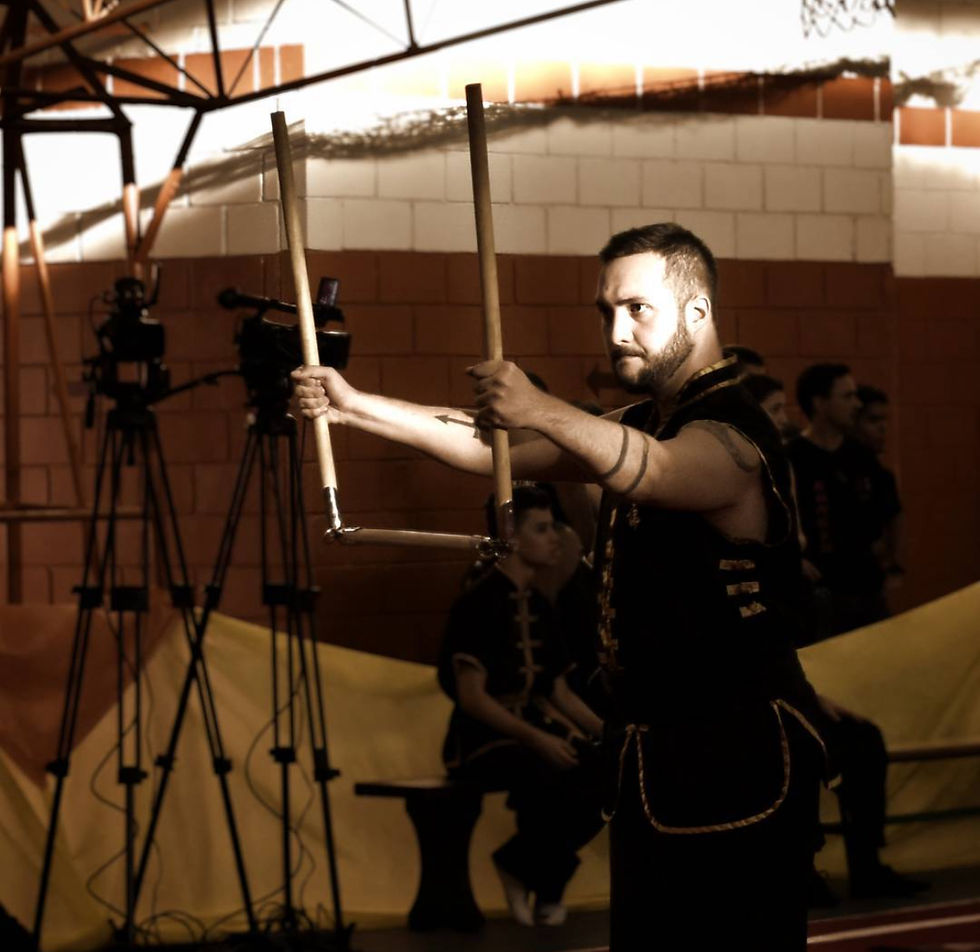
Body.
Mind.
And, if you'll allow me to be a little romantic, soul.
Intent and action are not the same thing.
Players react to intention before they react to impact.
A subtle weight shift.
A shoulder rotation.
A brief anticipation.
Life appears in the space between thought and movement.
And perhaps that's why I love animating combat so much.
Not because I enjoy punches and kicks.
But because movement, when guided by intention, has the power to make characters feel alive.


Comentários